
Why Aren’t My Seeds Germinating?
Troubleshoot non-sprouting seeds by diagnosing soil temperature, moisture swings, planting depth, light requirements, and seed viability.
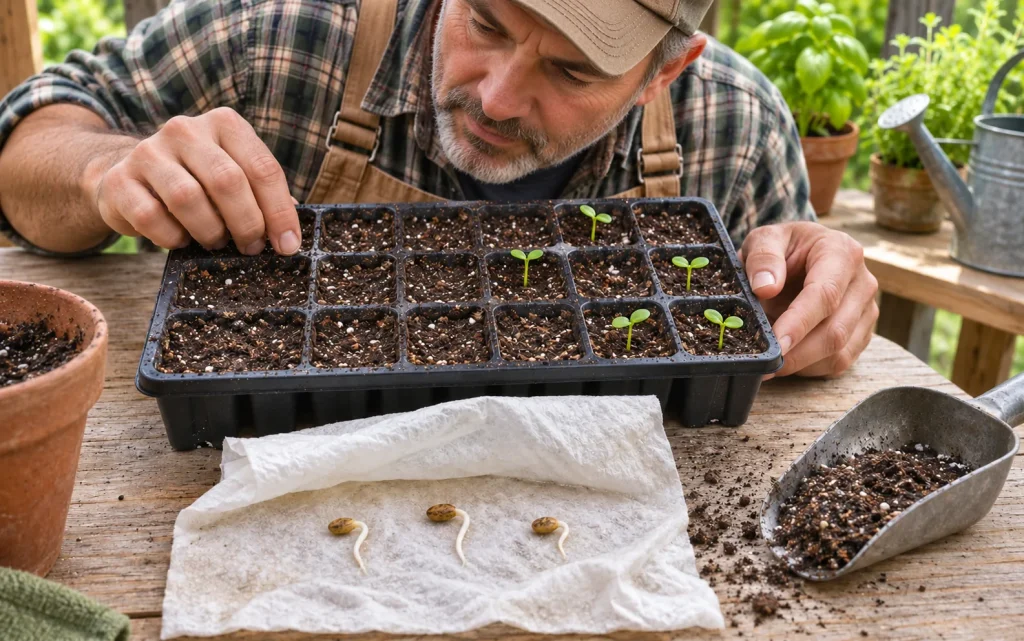
Poor seed germination typically results from one of five environmental issues: soil that is too cold or excessively hot, moisture swings that allow sprouting seeds to dry out, planting too deeply, lack of germination light, or old, non-viable seed stock. By diagnosing the condition of the seed within its expected emergence window, you can correct moisture and heat settings before resowing. University of Maryland Extension · University of Minnesota Extension
1. Diagnostic troubleshooting guide
If your seeds have passed their expected germination window (listed on the packet) without showing green sprouts, use this diagnostic table to identify the cause:
| What Happened | Most Likely Cause | Corrective Action |
|---|---|---|
| Seeds vanished or rotted into mush | Soil remained cold and soggy, causing fungal rot (damping-off) | Use fresh soilless seed mix, improve tray drainage, and increase bottom heat to 70°F |
| Seeds swelled but never broke through | Moisture dried out after the initial root tip (radicle) emerged | Keep soil consistently moist; cover trays with a clear humidity dome until emergence |
| Tiny seeds failed to appear | Buried too deep or denied light needed to break dormancy | Surface-sow tiny seeds (like lettuce or snapdragons); press lightly into moist mix without burying |
| Seeds remain firm and unchanged | Soil temperature is outside the biological germination threshold | Check soil temperature with a thermometer; use a seedling heat mat for warm-season crops |
| Patchy, low emergence across the tray | Uneven watering or old seed with declining viability | Test a sample of older seeds before planting; bottom-water trays to ensure uniform moisture |
2. Soil temperature: the primary biological trigger
Every seed variety has a minimum, optimal, and maximum soil temperature threshold for germination:
- Cool-season vegetables (spinach, lettuce, peas): Germinate well in soil temperatures between 45°F and 65°F. Sowing in soil warmer than 75°F to 80°F can induce thermal dormancy, causing lettuce and spinach seeds to fail completely.
- Warm-season vegetables (tomatoes, peppers, eggplants): Require soil temperatures of 70°F to 85°F to sprout reliably. In a 55°F room without supplemental bottom heat, tomato seeds take up to three weeks to germinate or rot in cold mix before emerging. Penn State Extension on Seed Biology
Use a seedling heat mat placed underneath your starter trays to maintain a steady 70°F to 75°F root-zone temperature until the first green shoots appear.
3. Moisture swings and planting depth
Once a seed absorbs water (imbibition) and its protective seed coat splits, the emerging root radicle is exceptionally fragile. If the surrounding potting mix dries out for even a few hours, the delicate embryo dehydrates and dies beneath the surface.
- Avoid over-sowing depth. A seed planted twice as deep as recommended exhausts its stored carbohydrates before its cotyledons can reach the surface to begin photosynthesis. Follow the standard rule: sow seeds at a depth equal to two to three times their narrowest width.
- Bottom-watering technique. Instead of spraying the soil surface with heavy streams of water that displace tiny seeds, pour water directly into the bottom carrying tray. Let the mix wick water upward for 20 to 30 minutes, then discard any standing water left in the tray.
If you are choosing between indoor trays and outdoor garden beds, read our practical guide on Direct Sowing vs. Starting Seeds Indoors.
4. How to test old seed packets for viability
Garden seeds lose viability over time depending on species and storage conditions:
- Dampen a clean paper towel with warm water (it should be damp, not dripping wet).
- Place 10 seeds in a spaced line across one half of the paper towel.
- Fold the paper towel over the seeds and seal it inside a zip-top plastic bag labeled with the variety and date.
- Keep the bag in a warm spot (70°F to 75°F) for the number of days listed on the packet for germination.
- Count how many seeds sprout:
- 7 to 10 sprouted (70%–100%): Strong viability; sow normally.
- 4 to 6 sprouted (40%–60%): Moderate viability; sow twice as thick to compensate.
- Fewer than 4 sprouted (<40%): Discard the packet and purchase fresh seed stock.
For full instructions on setting up trays and grow lights, see How to Start Seeds Indoors.