
Direct Sowing vs. Starting Seeds Indoors
Learn which crops thrive when sown straight into garden beds, which need an indoor head start, and how to match your planting method to your growing season.
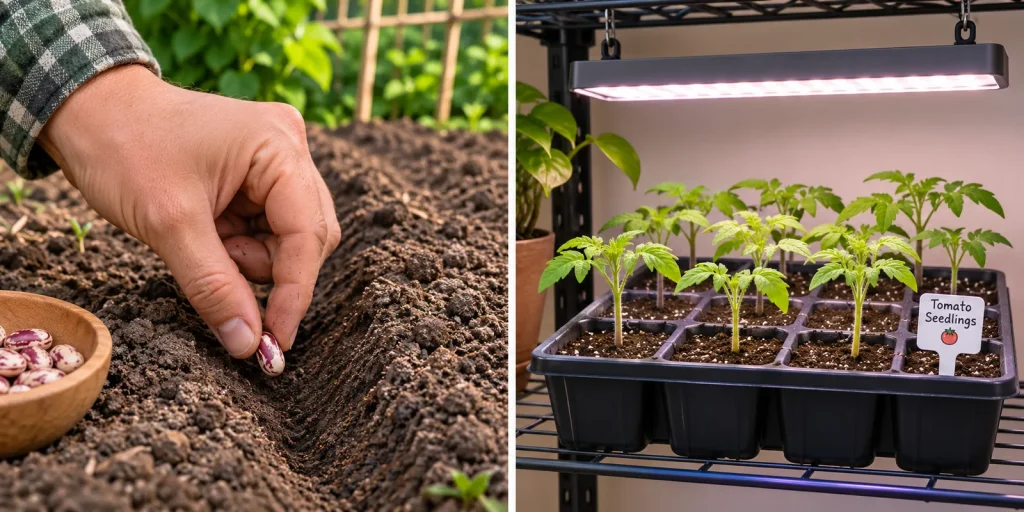
Choose between direct sowing and starting seeds indoors based on three factors: how long the crop takes to mature relative to your frost-free season, whether the plant tolerates root disturbance, and whether your outdoor soil is warm enough for reliable germination. Direct sowing eliminates transplant shock and requires no indoor lights or trays, while starting indoors lets you extend a short growing season by four to eight weeks. University of Maryland Extension · University of Minnesota Extension
1. When direct sowing makes the most sense
Direct sowing means planting seeds directly into outdoor garden beds or containers where they will grow to maturity. This method works best for:
- Crops with sensitive taproots. Carrots, radishes, turnips, parsnips, and beets produce deformed or stunted roots if their main taproot hits container walls or suffers damage during transplanting. University of Minnesota Extension on root crops
- Fast-maturing cool-season greens. Spinach, arugula, and loose-leaf lettuce germinate readily in cool spring soils (45°F to 65°F) and mature in 30 to 50 days, making an indoor start unnecessary.
- Large, fast-growing summer seeds. Beans, peas, corn, squash, and melons have large seeds with substantial energy reserves. When planted in warm outdoor soil (65°F or warmer for beans and squash; 45°F to 50°F for peas), they emerge in 5 to 10 days and quickly outpace indoor transplants that stall from transplant shock. University of Wisconsin–Madison Extension
For direct sowing, prepare a fine seedbed free of large clods. Ensure the soil has reached the minimum temperature recommended on your seed packet before planting.
2. When starting seeds indoors is necessary
Starting indoors gives seeds a controlled environment with optimal temperature, consistent moisture, and supplemental light before outdoor conditions become hospitable. Choose indoor starting for:
- Long-season, frost-tender crops. Tomatoes, sweet and hot peppers, and eggplants require 70 to 100+ warm frost-free days after transplanting to produce fruit. In USDA hardiness zones 3 through 7, outdoor seasons are too short to grow these crops from direct-sown seed before fall freezes arrive.
- Tiny, slow-growing seeds. Onions, leeks, celery, and many perennial culinary herbs (such as thyme and oregano) take weeks to establish and can easily be washed away or smothered by weeds outdoors.
- High-value garden flowers. Varieties like snapdragons and petunias need precise indoor moisture and warmth (65°F to 75°F) to develop sturdy root balls before garden planting.
If you are setting up an indoor station, use containers with drainage holes and a dedicated soilless medium. Review our guide on Seed Starting Mix vs. Potting Mix to avoid compacting delicate seedling roots.
3. How to choose for your garden setup
| Factor | Direct Sowing | Starting Seeds Indoors |
|---|---|---|
| Best crops | Carrots, radishes, peas, beans, corn, squash, cucumbers, beets, sunflowers | Tomatoes, peppers, eggplants, onions, broccoli, cabbage, slow culinary herbs |
| Root sensitivity | Ideal for taproots and disturbance-sensitive root systems | Best for fibrous root systems that hold soil together in cell plugs |
| Equipment required | Garden trowel, garden hose or watering can, row markers | Trays with drainage, humidity domes, grow lights, heating mats, soilless mix |
| Transplant shock | Zero; seedlings grow undisturbed in place | Moderate; requires 7–14 days of gradual hardening off before planting out |
| Cost & space | Minimal cost; uses existing outdoor bed or container space | Higher initial investment; requires indoor shelf space and electricity for lights |
| Season impact | Limited by local outdoor soil warmth and frost dates | Adds 4 to 8 weeks to your productive growing window |
4. A practical decision framework
To decide on a specific packet in your collection, follow this four-step checklist:
- Calculate your outdoor window. Determine your local average date of last spring freeze and first fall freeze. Subtract the two to find your frost-free days. NOAA Climate Data
- Check days to maturity on the seed packet. If the packet says “85 days to harvest from transplant” and your outdoor frost-free window is only 110 days, direct sowing will not yield a harvest before fall frost kills the plants.
- Assess the root habit. If the crop produces an edible underground taproot, direct sow it outdoors. If it forms fibrous roots, it can handle container transplanting.
- Plan indoor timing. For seeds that need an indoor start, count backward from your planned outdoor transplant date according to the packet (typically 6 to 8 weeks for tomatoes and peppers). For step-by-step indoor sowing and lighting instructions, read How to Start Seeds Indoors.