
How to Grow Chives From Seed
Learn how to cluster-sow chive seeds, establish perennial clumps in beds or containers, and harvest tender leaves and edible purple blossoms.
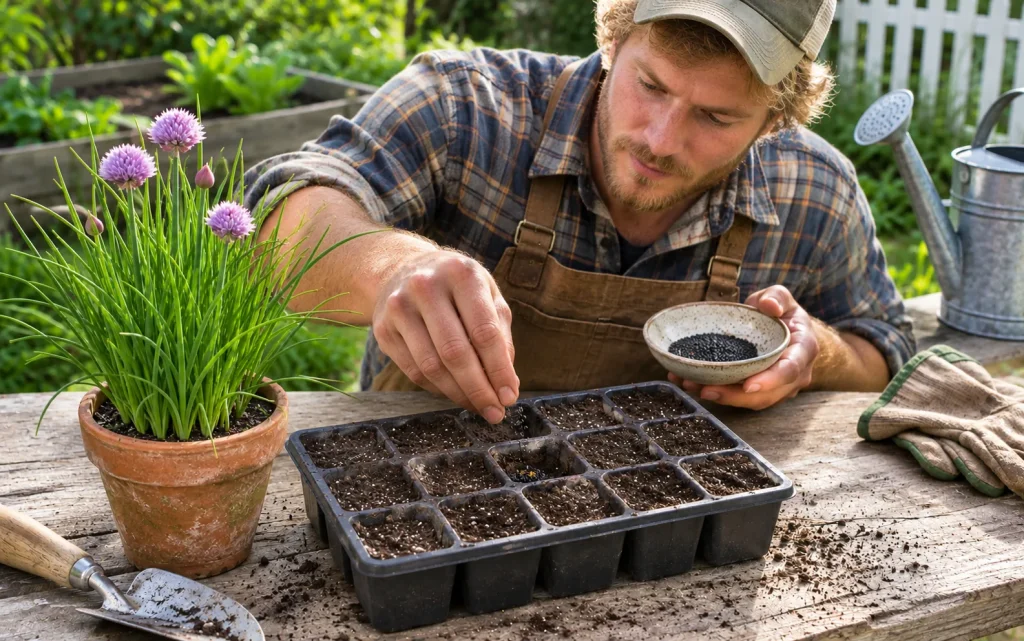
Grow common chives (Allium schoenoprasum) from seed by sowing 1/4 inch deep in early spring once soil reaches 60°F to 70°F, planting seeds in clusters of four to six rather than single strands. As a hardy perennial herb (USDA Zones 3 through 9), chives take 14 to 21 days to emerge and require a full growing season to establish strong root crowns before heavy harvesting begins. Once established, chive clumps produce delicate, onion-flavored hollow leaves and edible purple pom-pom blossoms year after year with minimal maintenance. Illinois Extension on Herbs · University of Maryland Extension on Chives
1. Common chives vs. garlic chives
Before ordering seed, choose between the two major culinary Allium species:
| Characteristic | Common Chives (Allium schoenoprasum) | Garlic Chives / Chinese Chives (Allium tuberosum) |
|---|---|---|
| Leaf Shape & Texture | Hollow, cylindrical, tube-like leaves | Flat, solid, ribbon-like leaves |
| Flavor Profile | Delicate, mild, sweet onion aroma | Distinctive, pungent, savory garlic flavor |
| Blossom Color & Season | Lavender to pale purple pom-poms in late spring | Star-shaped pure white clusters in late summer |
| Culinary Uses | Raw garnishes, baked potatoes, omelets, dips | Asian dumplings, stir-fries, noodle dishes |
| Reseeding Behavior | Moderate self-seeding; easy to control | Aggressive self-seeder; deadhead flowers promptly |
2. Cluster sowing: the secret to full, productive clumps
In nature, chives grow as tight, clustering perennial bulbs. Sowing single seeds far apart results in spindly, floppy stems:
- The cluster sowing method: When starting in cell packs or outdoor pots, drop 4 to 6 seeds together into the same hole. Do not thin the sprouts when they appear. Allowing the cluster to grow as a unit creates a sturdy, self-supporting green clump.
- Sowing depth and darkness: Plant seeds 1/4 inch deep in loose, well-draining potting mix or garden loam. Chive seeds germinate best in darkness; cover seeds lightly and maintain soil moisture.
- Germination window: Chive seeds are slow to hydrate, taking 14 to 21 days to emerge at 65°F to 70°F. If you start seeds indoors under lights, sow them 6 to 8 weeks before your average last spring freeze. University of Minnesota Extension on Chives
To compare chives with other kitchen herbs grown from seed, read our guides on How to Grow Basil From Seed and How to Grow Cilantro From Seed.
3. Container growing and soil requirements
Chives are among the easiest culinary herbs to grow in patio pots or sunny kitchen windowsills:
- Container sizing: A standard 8-to-10-inch diameter pot with bottom drainage is ideal for one mature clump. Chives have shallow, fibrous roots that do not require deep planters.
- Soil and sunlight: Provide full sun (at least 6 hours of direct light daily). Chives tolerate average garden soil but flourish in rich soil enriched with finished compost and a pH between 6.0 and 7.0.
- Moisture balance: Keep the root zone evenly moist. While established plants withstand short dry spells, letting pots dry out completely causes leaf tips to turn brown, papery, and yellow.
4. When and how to harvest
- Year 1 establishment: During the first season from seed, harvest lightly. Take only a few outer leaves in late summer so the plant directs its photosynthetic energy into building underground bulb clusters and energy reserves for winter.
- Year 2 and beyond (Regular harvesting): Once established, harvest anytime stems reach 6 inches tall.
- The cut technique: Use sharp kitchen scissors to cut leaves 1 to 2 inches above the soil line. Never pluck individual leaf tips or pull stems from the ground, which tears the bulb crown. Cutting leaves near the base encourages the plant to immediately push out a fresh flush of tender green shoots.
- Edible flower harvest: In late spring, plants produce round purple blossoms. Snip flower heads as soon as they open; pull the individual purple florets apart and sprinkle them over salads, goat cheese, or cold soups for a mild onion flavor and vibrant color.