
How to Grow Cilantro From Seed
Learn how to direct sow cilantro, thin seedlings properly, harvest tender leaves repeatedly, and collect homegrown coriander seeds when plants bolt.
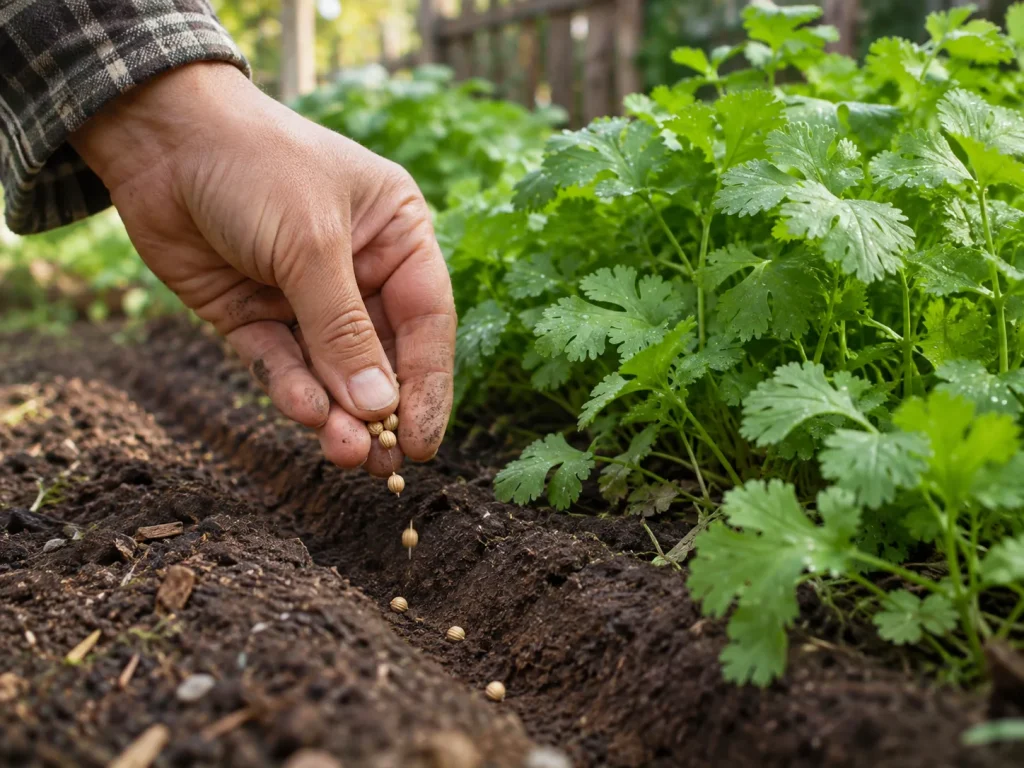
Grow cilantro (Coriandrum sativum) by sowing seeds directly outdoors in early spring or early autumn when air temperatures average between 50°F and 75°F. Cilantro forms a deep, delicate taproot that dislikes transplanting, and summer heat above 75°F causes plants to quickly flower and bolt. For continuous fresh leaf harvests, sow small batches of seed every two to three weeks, or let late-season flowers mature into a harvest of aromatic coriander seeds. Illinois Extension on Herbs · University of Maryland Extension on Cilantro
1. Direct sowing cilantro seeds
Unlike warm-weather herbs such as basil that love summer heat, cilantro is a cool-season annual. Choose a planting site that receives full sun in early spring or light afternoon shade in warmer zones.
- Seed structure. Each round cilantro “seed” is actually a dried fruit containing two individual seeds. Cracking the outer husk by gently rolling seeds on a clean board with a rolling pin before sowing can speed up water absorption and emergence.
- Sowing depth and spacing. Plant seeds 1/4 to 1/2 inch deep in loose, well-draining garden soil or containers. Space seeds 1 to 2 inches apart in rows, or scatter them lightly in a wide pot. Keep the soil surface consistently moist. Seedlings emerge in 7 to 14 days at soil temperatures around 55°F to 68°F.
If you are growing herbs in outdoor pots or on a balcony, choose a container at least 8 to 10 inches deep to accommodate its taproot. For more tips on container setup, see How to Start a Container Garden.
2. Thinning and caring for young seedlings
Crowded cilantro plants compete for root space and moisture, triggering premature flowering.
- When to thin. When seedlings reach 2 inches tall and produce their first feathery true leaves, thin the stand so plants are 4 to 6 inches apart.
- How to thin. Do not yank seedlings out by hand, as this tears the roots of neighboring plants. Use clean garden scissors or kitchen shears to snip weaker seedlings off at the soil level. The snipped baby greens are tender and ready to use in cooking.
- Watering and fertility. Keep the soil evenly moist but never soggy. Cilantro requires minimal fertilizer; a light application of balanced organic fertilizer or a top-dressing of compost at planting provides ample nutrients. Excess nitrogen results in lush leaves with weaker essential oil concentration and flavor.
3. Harvesting leaves vs. harvesting coriander seed
| Stage | What to Look For | How to Harvest | Culinary Use |
|---|---|---|---|
| Leaf Harvest (Cilantro) | Stems are 6 to 8 inches tall; foliage is broad and serrated | Cut the outer, lower stems 1 to 2 inches above soil level, leaving the inner crown to produce new foliage | Fresh salsas, guacamole, curries, and garnishes |
| Flowering Stage (Bolting) | Center stem elongates; upper leaves become fine, thread-like; white or pink umbel blooms appear | Stop harvesting leaves (they turn bitter); let beneficial bees and parasitic wasps visit flowers | Garden pollinator support and pest control |
| Seed Harvest (Coriander) | Flowers fade into green spherical seed clusters that dry and turn light brown/tan | Cut entire flower heads into a paper bag on a dry morning; hang upside down to dry for 2 weeks | Ground spice for marinades, baking, and rubs, or saved seed for next season |
4. Preventing premature bolting
Bolting occurs when the plant shifts from vegetative leaf production to reproductive seed production. Once bolting begins, leaf flavor becomes harsh and bitter.
To prolong your leaf harvest:
- Choose slow-bolt cultivars. Look for varieties labeled ‘Calypso’, ‘Santo’, or ‘Cruiser’, which can withstand higher temperatures for an extra 10 to 14 days compared to standard cultivars. Utah State University Extension on Cilantro
- Plant in succession. Sow a fresh row or pot of seeds every 2 to 3 weeks from early spring until early summer, then resume sowing in late summer for a fall harvest.
- Provide afternoon shade. In regions where spring temperatures heat up rapidly, position pots where tall crops or structures block intense afternoon sun.
- Transition to warm-season herbs. When summer heat causes your spring cilantro to set seed, switch your focus to heat-loving crops. Read How to Grow Basil From Seed to keep your fresh kitchen herb supply going through the hottest months.