
How to Start Seeds Indoors
Learn when to sow indoors, what to put in your seed tray, how to care for seedlings, and when to move them outside.
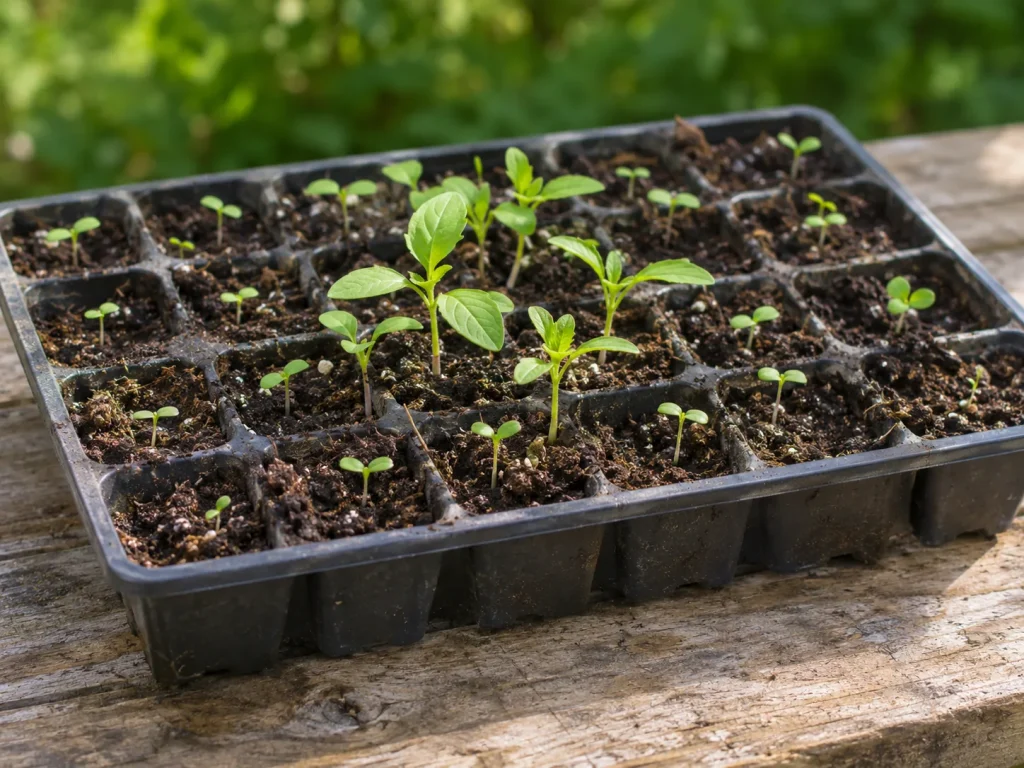
Start seeds indoors by counting back from the date you expect to plant them outside. Sow them at the depth listed on the packet in a container with drainage. Keep the mix evenly moist as the seeds germinate, then give the seedlings bright light. Before transplanting, spend about two weeks getting them used to outdoor conditions. University of Maryland Extension · University of Minnesota Extension
1. Pick the right seeds and count back from planting day
Tomatoes are a good candidate for an indoor start. Sow carrots and parsnips directly where they’ll grow. Check the packet for instructions for your variety, including the sowing depth and when to plant. University of Minnesota Extension on tomatoes · University of Minnesota Extension on carrots and parsnips
Example. If you expect to set tomatoes outside around May 15 and your packet says to start six weeks before transplanting, sow around April 3. Pick your outdoor date using local guidance for the crop. For tomatoes, wait until the frost risk has passed and the soil has warmed. Use your area’s usual last spring freeze as a planning reference, then check the forecast before moving plants out. University of Minnesota Extension on tomatoes · NOAA on the last spring freeze
2. Set up a tray and sow
Use clean cell packs or small pots with drainage holes, a tray to catch water, fresh seed-starting mix, and labels. Set up a grow light before sowing so it’s ready as soon as the seedlings emerge. University of Maryland Extension on containers and mix · University of Maryland Extension on lights
Moisten the mix throughout, then fill the cells. Follow the seed packet for depth. Some seeds, such as lettuce, can be left on the surface or barely covered. Label each variety and write down the sowing date so you can check it against the expected germination window. University of Maryland Extension
3. Keep the seeds moist while they germinate
Check the tray daily. Mist the surface gently if it’s drying, or let moisture wick up from a shallow layer of water in the tray. Pour off any water that remains after the mix has absorbed what it needs. If you used a clear humidity dome, take it off when sprouts appear. University of Maryland Extension · University of Minnesota Extension
4. Give the seedlings light and room to grow
A window often gives seedlings too little light. For typical vegetable transplants under fluorescent or LED grow lights, University of Maryland Extension suggests running the lights for 14 to 16 hours a day. Check the fixture instructions for placement and adjust the height as the plants grow. Stems that stretch and lean can be a sign they need brighter light. University of Maryland Extension
If several seedlings sprout in a cell, wait until you can see the first true leaves, which emerge after the initial seed leaves. Keep the strongest seedling and snip the others at the surface so you leave its roots in place. If a seedling outgrows its cell before planting day, move it to a slightly larger pot with drainage. University of Minnesota Extension
5. Ease the seedlings outdoors
About two weeks before planting, put the seedlings outside for a few hours in a sheltered, shady spot on a mild day. Bring them back inside before it gets cold. Gradually increase their time outside and their exposure to sunlight. Once they’ve adjusted and conditions are right for the crop, transplant on a cloudy day or in the late afternoon. University of Minnesota Extension
What to check when something goes wrong
| What you see | What to check |
|---|---|
| Nothing has sprouted | Check the expected germination window, then check the sowing depth, mix temperature, and whether the mix dried out. University of Maryland Extension |
| Seedlings are tall and leaning | Check whether the grow light is too far away or the seedlings are relying on weak window light. University of Maryland Extension |
| Seedlings collapse at the soil line | A pinched or rotting stem can indicate damping-off disease. Use clean containers, fresh mix, and good drainage for your next sowing. University of Minnesota Extension |